
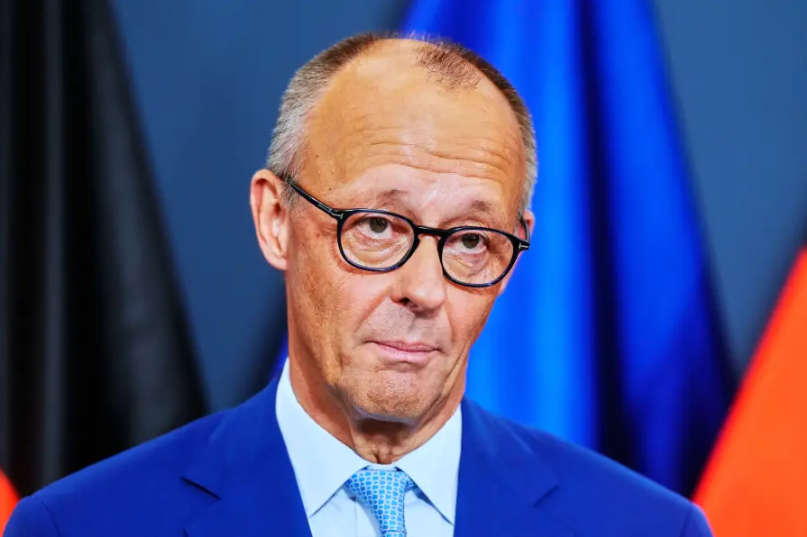
The balance of power in Germany looks set to shift after some key local election results, current polls and upcoming election predictions, but where will it end up?
The 2026 German state elections took place over the last few months in Baden-Wuttermberg, Rheinland-Pfalz, Saxony-Anhalt, Mecklenburg-Vonpommerm and Berlin, and the results are in, a shift in power beginning to appear. Many are now speculating his could be the end of the road for current Chancellor, Friedrich Merz. Having only been in power since 2025, head of the Christian Democratic Union (CDU) Merz is already facing a relatively devastating approval rating and with local election results indicating favour for other parties, Merz may be faced with a mid-term removal from power. Whilst these elections alone will not topple the CDU and Merz directly, being five of the sixteen states of the country and one of them being the city-state of the capital Berlin, they do have an impact. Should they unveil weaknesses and inconsistencies across the current leadership, it may trigger change to occur.
The matter of his personal approval rating is significant, as while the CDU may yet find a way to hold onto power, Merz is facing one of the lowest approval ratings of any post-war leader. NBC are reporting a rating of 14%, while The Economist state Merz is trusted by as little as 10% of Germans.
Earlier this year, Baden-Wurttemberg and Rheinland Pfalz saw at least some retaining of power for the CDU. The first of the two elections, in the state of Baden-Wurttemberg, saw a Greens victory and a resulting coalition between the Greens and CDU, whilst the latter resulted in a CDU victory, and another coalition between the CDU and SDP.
That said, neither election resulted in a majority for the CDU, and the first was not even a victory for them.
In the lead up to the most recent elections in Mecklenburg-Vonpommerm and Berlin, there was little confidence of victory for the CDU and the question posed was, if not the CDU, then who?
The right is on the rise in Germany, with the AfD - Alternative fur Deutschland (Alternative for Germany) - seem to be leading the race, after a historic victory in the local election in Saxony-Anhalt. The AfD is expected to champion the vote in Mecklenburg-Vonpommerm.
Described as far-right by many, a label AfD themselves reject, Europe looks on with concern at the potential for the right to once again assert themselves in the seat of German power, at the head of the region’s largest economy and population.

Members of Alternative fur Deutschland after a historic victory in Saxony-Anhalt, 2026.
Their policies are intrinsically similar to those of the far-right of Germany’s past, with anti-immigration sentiments, an approach of friendliness towards Russia, and a ‘Germany-first’ motive leading their policy.
Their policies are appealing in the east of the country, as a result of the region’s history as part of the USSR. Previously the GDR (German Democratic Republic), the eastern half of Germany harbours a range of demographic and worldview differences to their counterpart in the west.
The legacy of the split in the nation during the Cold War is visible still today, through wealth disparity and a lack of higher paying jobs in the east, differing views on democracy and poltiics in general, and even social and demographic differences, such as population decline in the east resulting from mass exit migration in the 1990s and different religious standpoints, with the east far more atheist, a trend continuing from the days of the Soviet Union, a religion-less state. It may explain in part why the CDU is not as well received in comparison to parties like AfD by the eastern states of the country, such as Saxony-Anhalt.
One of the other key contenders in the running is the SPD, a party of the centre-left led by Manuela Schwesig, who has labelled herself die Frau gegen Blau (women against blue), as a direct statement she is running in opposition to the AfD, with blue as their party colour. To this end, she is mopping up anti-AfD sentiment within the electorate to bolster her numbers, and is doing well in the running.
Now, however, the results are in, and they couldn't be more divided. The CDU won neither Berlin nor Mecklenburg-Vonpommerm, but in each state a distinctly different vision for the future of Germany has been made clear. In Berlin, the far-left party Die Linke (the Left) won 25.7% of the vote, winning the state, while the CDU only had a voteshare of 18.8%. AfD came in third in Berlin, following the Greens, but the SPD did not do so well in the city-state, achieving their worst result to date in a Berlin city-state election with only 12.9% of the vote. They did better, however, elsewhere on the map.
Meanwhile, in Mecklenburg-Vonpommerm, it was the AfD who secured a victory, with 38.2% of the vote, followed in second place with the SPD who themselves won 35.5% of the vote. For Merz, Mecklenburg-Vonpommerm was a disastrous defeat, as the party came away with a vote share of only 4.9%.
Merz announced his intention to say, despite the 'disastrous' results, during a crisis meeting of CDU leadership in recent days. However, there have been calls for Merz to stand down including from the leadership of the AfD. It is entirely plausible that these elections may have a detrimental impact on the CDU, or, perhaps as we saw in the UK after the May local elections, the party may survive at the expense of its current leader, Merz widely believed to be in trouble after these election results combined with current opinion polls.
 Trump says US will rename artificial intelligence 'super intelligence'
 What is going on with Reform UK right now?
 The re-defining of Syria on the world stage
 Burnham's shapening speech "I will give this my all."
 Andy Burnham Confirmed as New Labour Leader Ahead of Move into No. 10
 Man, 26, arrested on suspicion of murder after Ann Widdecombe found dead at home